Children’s Health, Safety, and Youth-Facing Environments

Nationally representative data show growing maternal concern about how youth-facing environments — including schools, digital platforms, and consumer products — are designed, governed, and regulated. Across these domains, concerns center on safety, accountability, and alignment with children’s developmental needs. Taken together, responses indicate declining confidence in whether current systems consistently prioritize child well-being. Tracking these signals over time provides early visibility into shifts in institutional trust, perceived safety standards, and expectations for governance — critical context as youth-facing systems evolve and oversight frameworks develop.

*   
AI & Child Safety: Mothers' Views on a Rising Influence in Kids' Lives
*   
Mothers’ Views on the Kids Online Safety Act (KOSA) and the Kids Off Social Media Act (KOSMA)
*   
The PROTECT Act and Recommendations from the Youth Vaping Epidemic Report
*   
Mothers' Views on Big Business and Trust
*   
The U.S. Education Climate
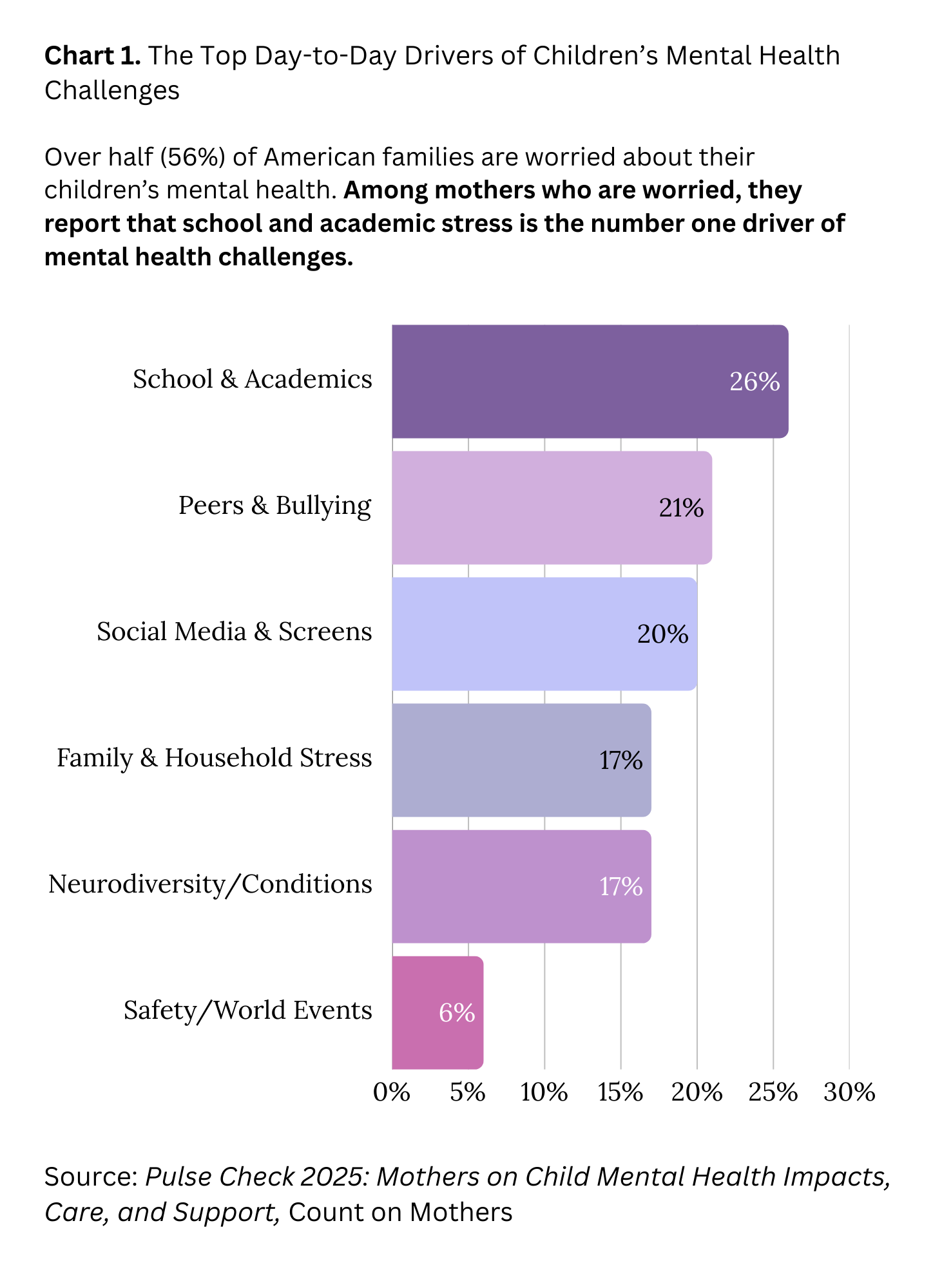
The Top Day-to-Day Drivers of Children’s Mental Health Challenges
Mothers’ Top Concerns About Children’s Exposure to Artificial Intelligence
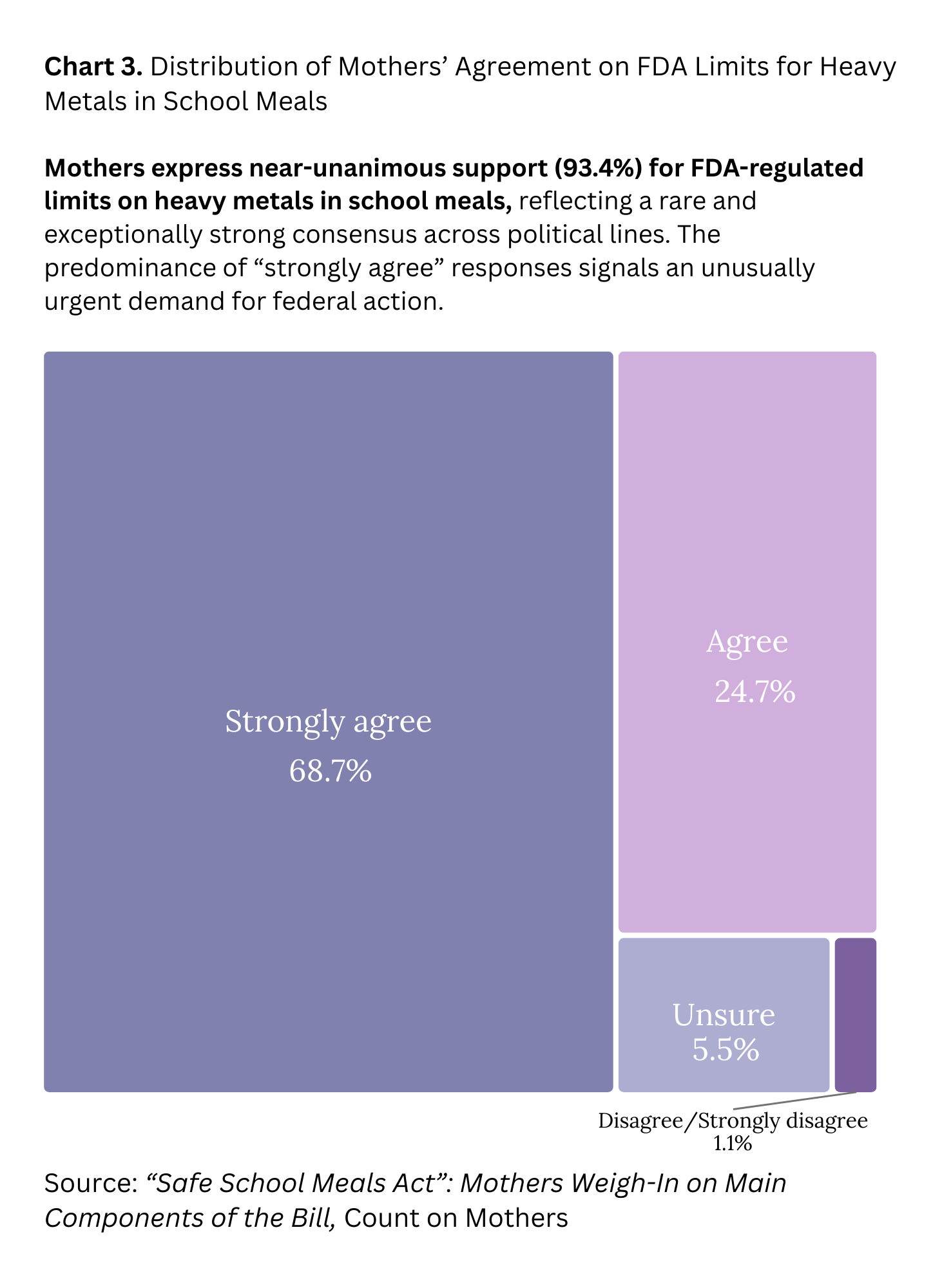
Mothers’ Agreement on FDA Limits for Heavy Metals in School Meals
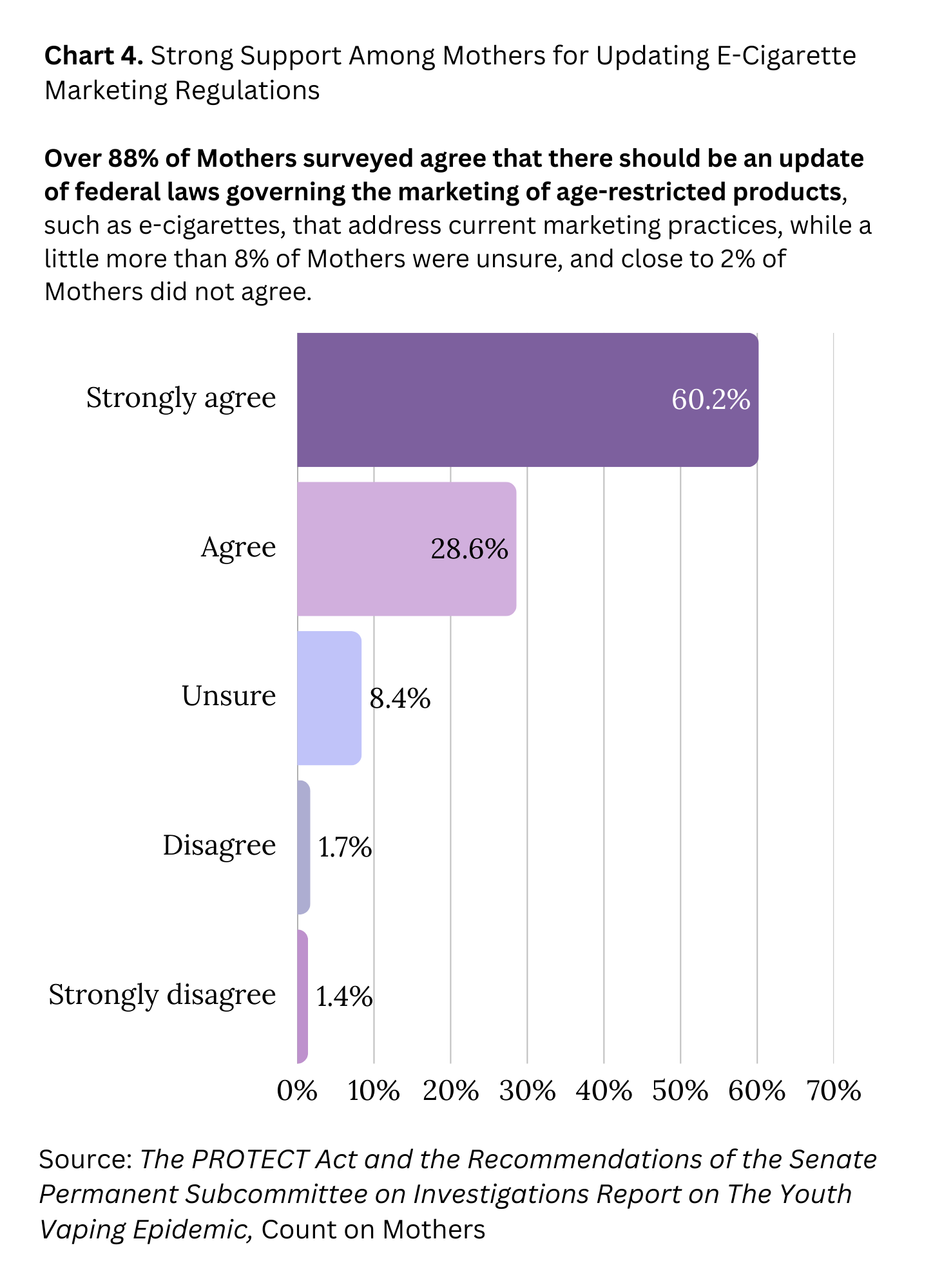
Support Among Mothers for Updating E-Cigarette Marketing Regulations

Shared Priorities and Cross-Partisan Alignment Among Mothers

Nationally representative data show that mothers demonstrate consistent alignment across political ideology, geography, age, and education levels on key issues affecting children and families. Agreement — often at supermajority levels — centers on affordability, safety, accountability, and long-term stability across healthcare, childcare, education, and youth-facing systems. In a polarized national environment, this degree of alignment represents a significant and measurable area of stability. Tracking cross-partisan consensus over time provides early insight into emerging pressure points, durable priorities, and opportunities for institutional action that resonate across demographic and political divides.

See Data Behind This Theme →

Child and Family Mental Health Access and Support

Nationally representative data show sustained concern among mothers about children’s emotional well-being, alongside elevated household stress. Across demographic groups, stress remains the most frequently cited obstacle to raising thriving families, and concern about youth substance use is consistently high. Many families report difficulty accessing timely and affordable mental health care. When systems are fragmented or financially out of reach, responsibility shifts back to households. Ongoing measurement in this domain provides early visibility into maternal stress trends, access barriers, institutional trust, and emerging risk signals — critical intelligence for health systems, insurers, educators, and philanthropic leaders designing responsive support structures.

See Data Behind This Theme →

Family Economic Security and Cost Pressures

Across healthcare, childcare, housing, food, and essential services, families report sustained financial strain as costs outpace income growth. In nationally representative Count on Mothers research, a majority identify stress and financial insecurity as primary barriers to raising thriving families. Beyond affordability alone, mothers report increasing administrative complexity across childcare, insurance, and basic services — raising the time and cognitive effort required to meet daily needs. Ongoing measurement in this domain provides early visibility into economic stress trends, trade-off behavior, institutional trust, and system-level friction — signals that influence healthcare utilization, education engagement, workforce participation, and long-term family stability.

See Data Behind This Theme →