Shared Priorities and Cross-Partisan Alignment Among Mothers

Mothers Represent a Broad Area of Common Ground in the U.S. Across political ideology, geography, age, ethnicity, and education levels, mothers show a high degree of alignment on the challenges families face and the priorities shaping children’s well-being. Agreement—often at supermajority levels—centers on affordability, safety, accountability, and long-term stability across childcare, healthcare, education, and youth-facing industries. In a polarized national context, mothers stand out as one of the largest groups with consistently shared priorities.

*   
AI & Child Safety: Mothers' Views on a Rising Influence in Kids' Lives
*   
Mothers’ Views on the Kids Online Safety Act (KOSA) and the Kids Off Social Media Act (KOSMA)
*   
Mothers' Views on Big Business and Trust
*   
Pulse Check 2025: Mothers on Child Mental Health Impacts, Care, and Support
*   
The Impact of Childcare Costs on Families' Financial Security
Mothers Across All Demographics Say Childcare Costs Impact Family Security
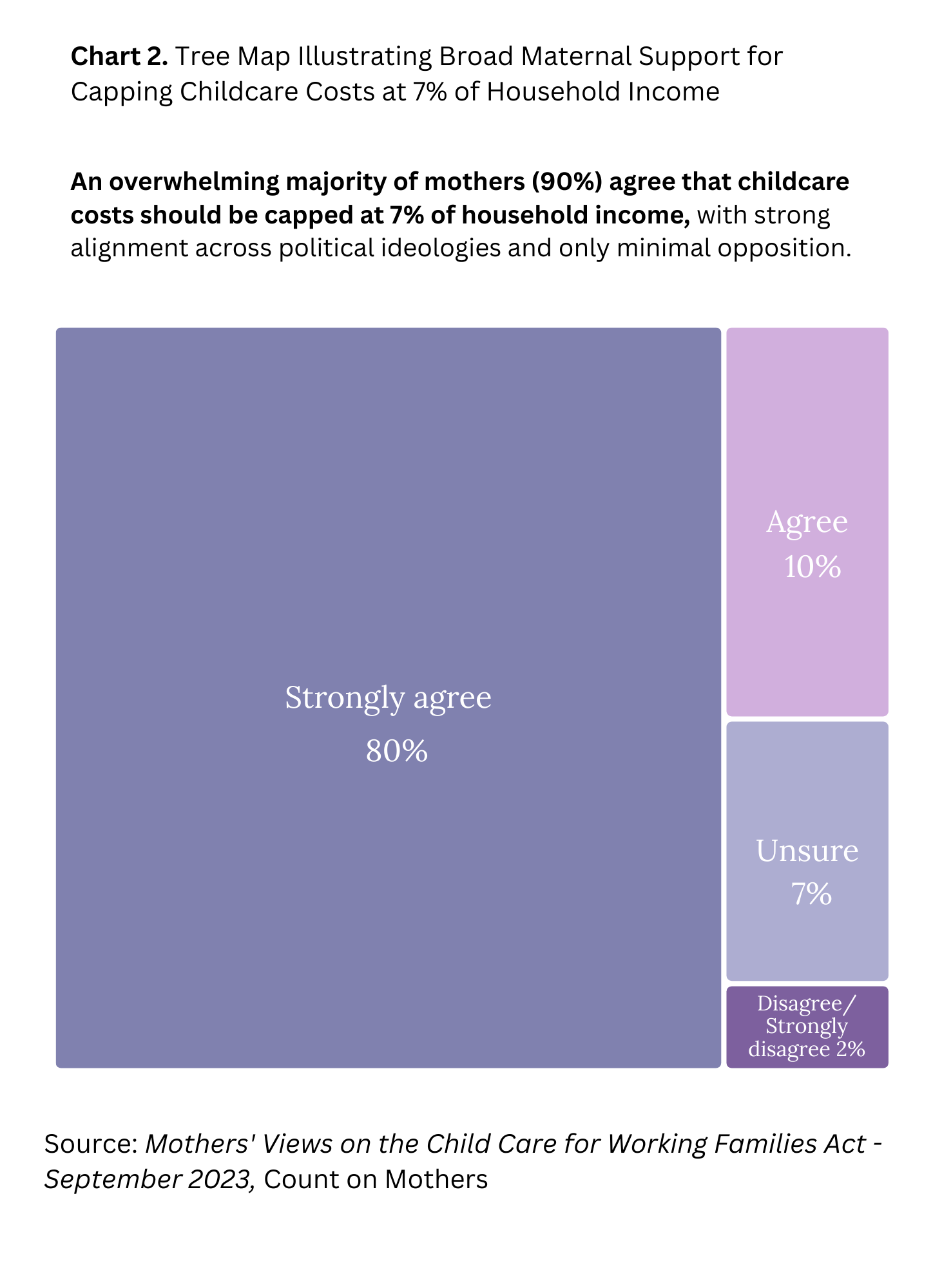
Broad Maternal Support for Capping Childcare Costs at 7% of Household Income
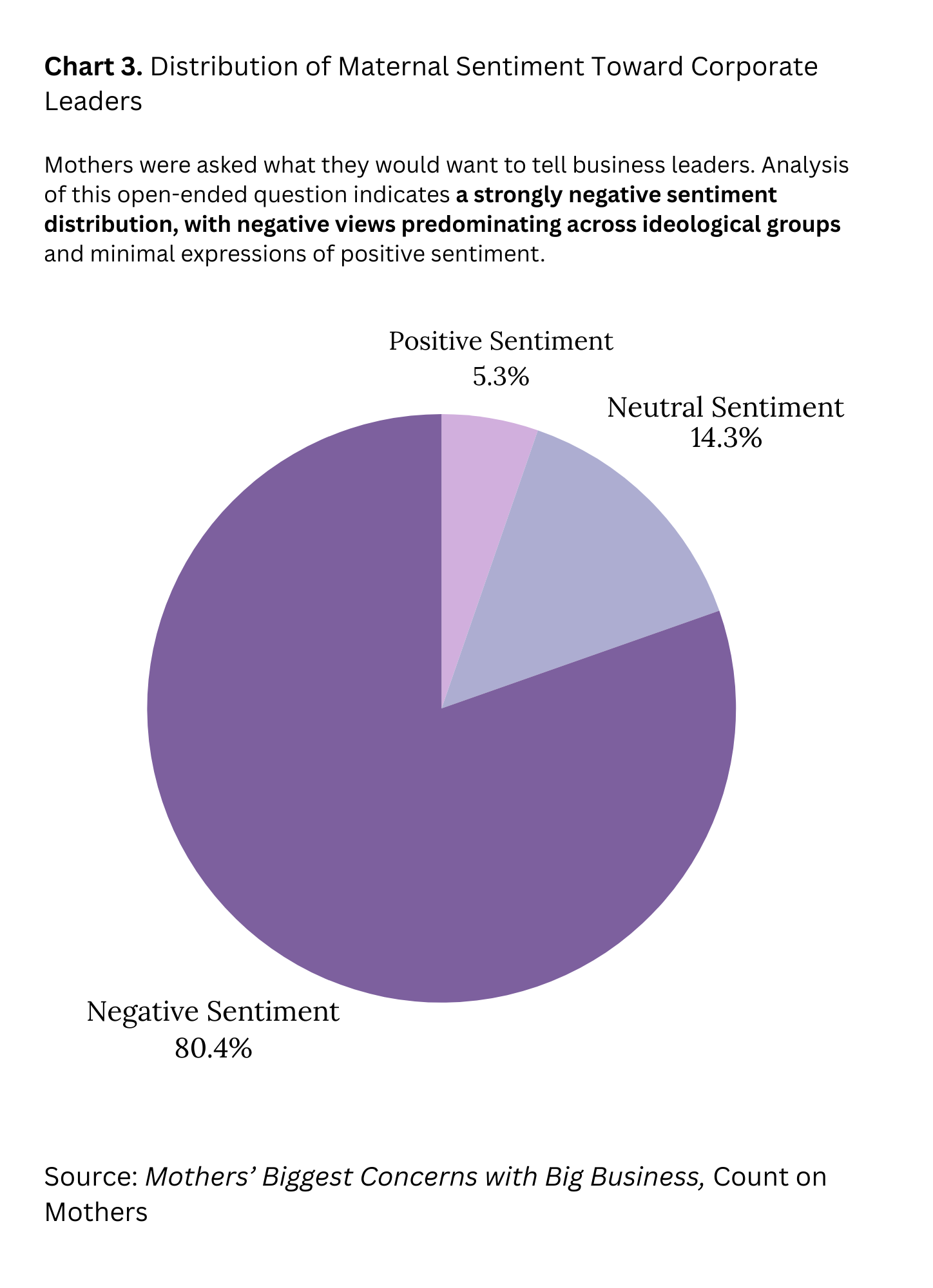
Mothers Overwhelmingly Do Not Trust Industry Leaders
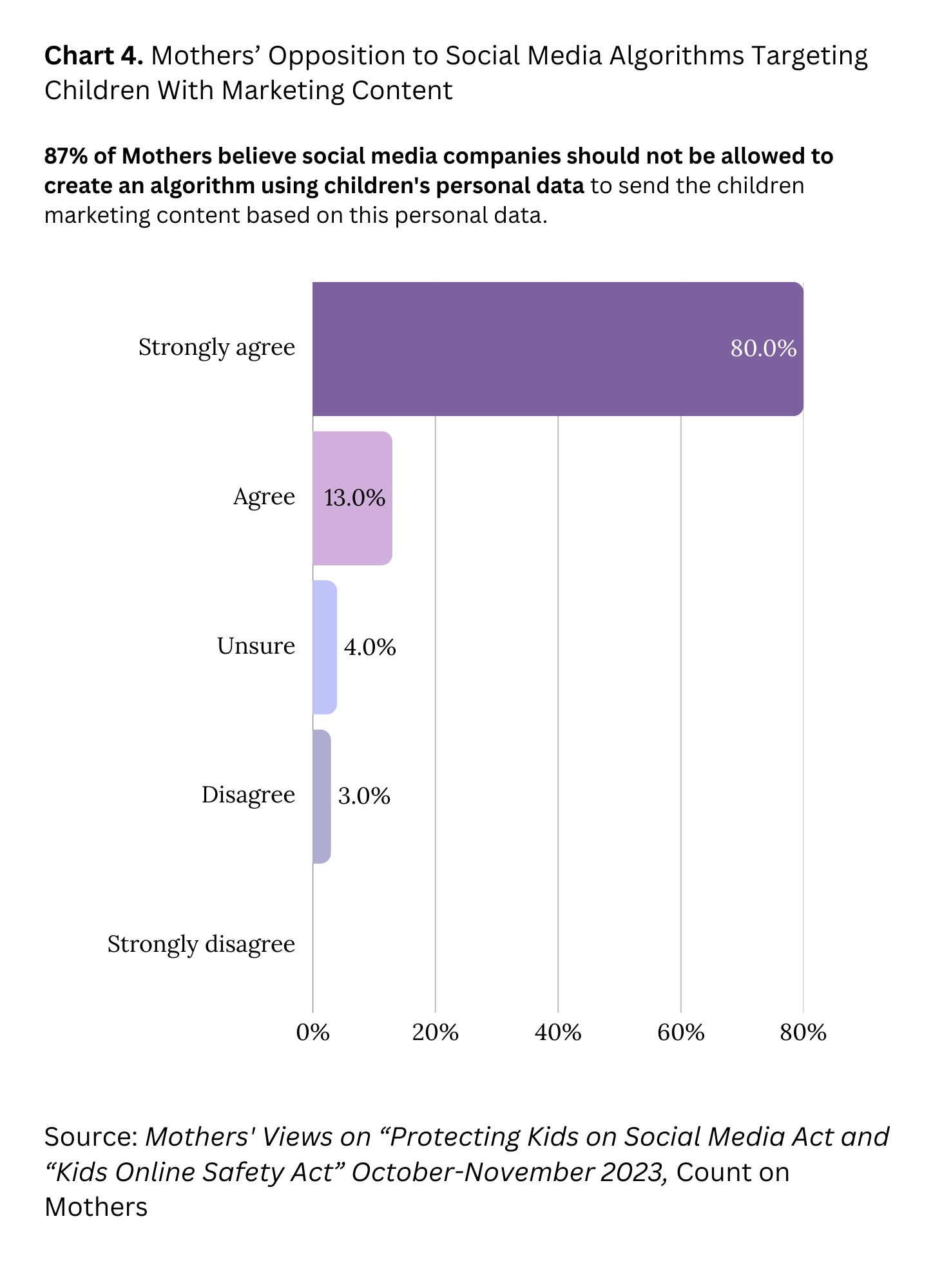
Mothers’ Oppose Social Media Algorithms Targeting Children With Marketing Content

Children’s Health, Safety, and Youth-Facing Environments

Many Environments and Institutions Shaping Children’s Lives Are Misaligned with Children's Health and Safety. Across school environments, digital platforms, youth-facing industries, and school food settings, mothers report concerns related to safety, accountability, and design priorities. These concerns include predatory marketing, youth products designed for addiction, and declines in confidence around school safety and food quality. Taken together, mothers’ responses suggest that many of these environments do not consistently protect or support children’s well-being.

See Data Behind This Theme →

Child and Family Mental Health Access and Support

Families Are Carrying a Growing Share of the Mental Health Burden. Mothers report increasing concern about children’s emotional well-being alongside rising stress and time constraints within households. Stress emerges as the most frequently cited obstacle to raising thriving families, with substance use a top concern across demographic groups. When timely and affordable mental health care and support are difficult to access, families often find themselves managing complex emotional and behavioral challenges without adequate professional guidance or resources.

See Data Behind This Theme →

Family Economic Security and Cost Pressures

The Cost of Being a Family Is Increasingly Unsustainable. Across healthcare, childcare, food, and basic living expenses, families face costs that continue to rise faster than incomes. Childcare contributes to financial insecurity for over half of U.S. families, limiting the ability to save for emergencies, education, or retirement, while rising private insurance costs and administrative burdens are associated with delayed care and poorer health outcomes. Taken together, these findings point to a growing mismatch between the costs families face and the financial resources and protections available to them.

See Data Behind This Theme →